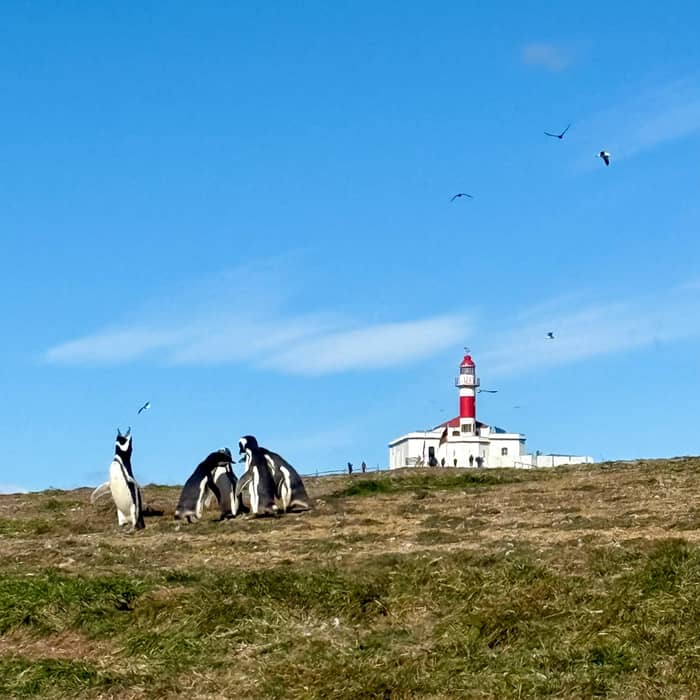
Busiest crossing
The landing stretch
First part of the trail
- LengthAbout 300 metres
- Watch forAdults carrying food
- RuleLet them pass
Choose your stop
The quick take
Official counts differ: CONAF counts the nesting pairs on Magdalena Island in the thousands, Sernatur counts the island's birds in far larger numbers, and both describe one of Chile's main Magellanic penguin colonies.
Colony facts
Map of 19 stops
Tap a route first, then a pin or stop, for its note and Google Maps.
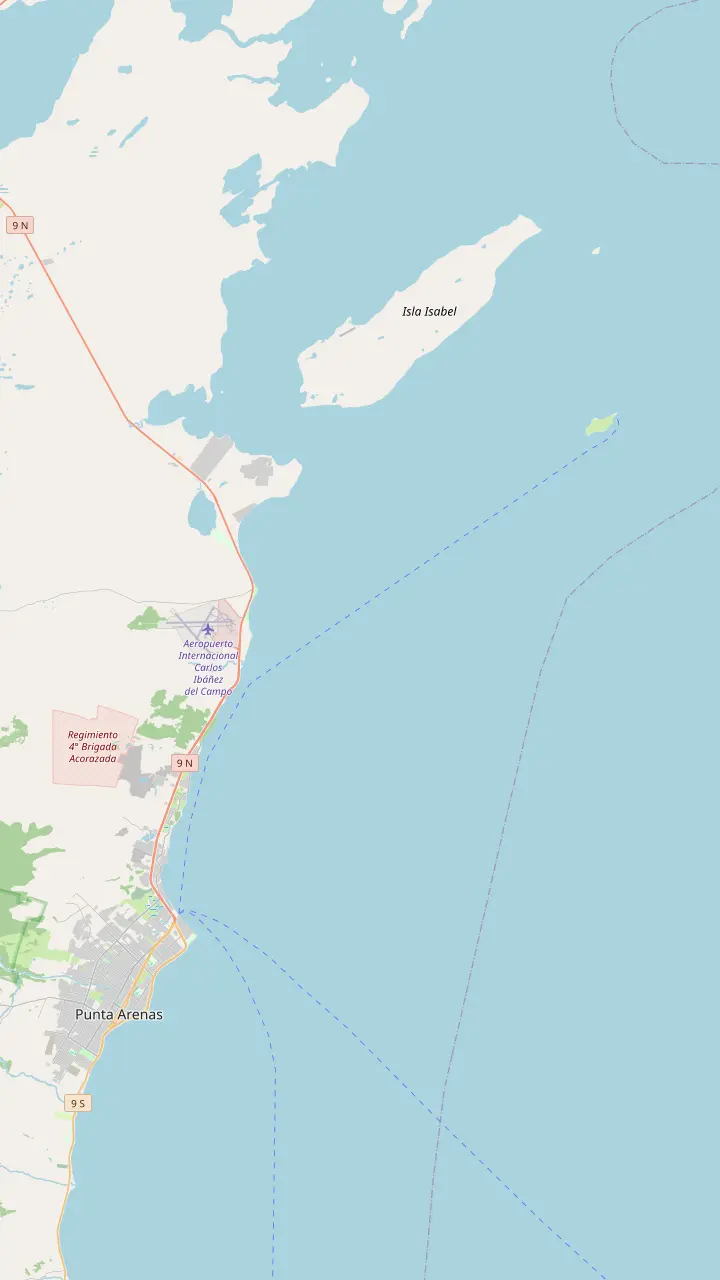
The lighthouse of 1902 that crowns the island walk; rangers keep an exhibition in the old keeper's house.
Google MapsBreeding ground of imperial cormorants and sea lions; landing is banned, so you watch from the boat.
Google MapsThe cape on the mainland that the two islands face, the cape the two islands face; the islands lie 35 km northeast of Punta Arenas.
Google MapsWhere the site tour's speedboat leaves for the islands, after a coach ride of 30 minutes.
Google MapsThe other city pier Sernatur lists for boats to the islands.
Google MapsPunta Arenas pier named by Sernatur as a departure point for boats to the monument.
Google MapsWhere the site tour finishes after the return coach ride.
Google Maps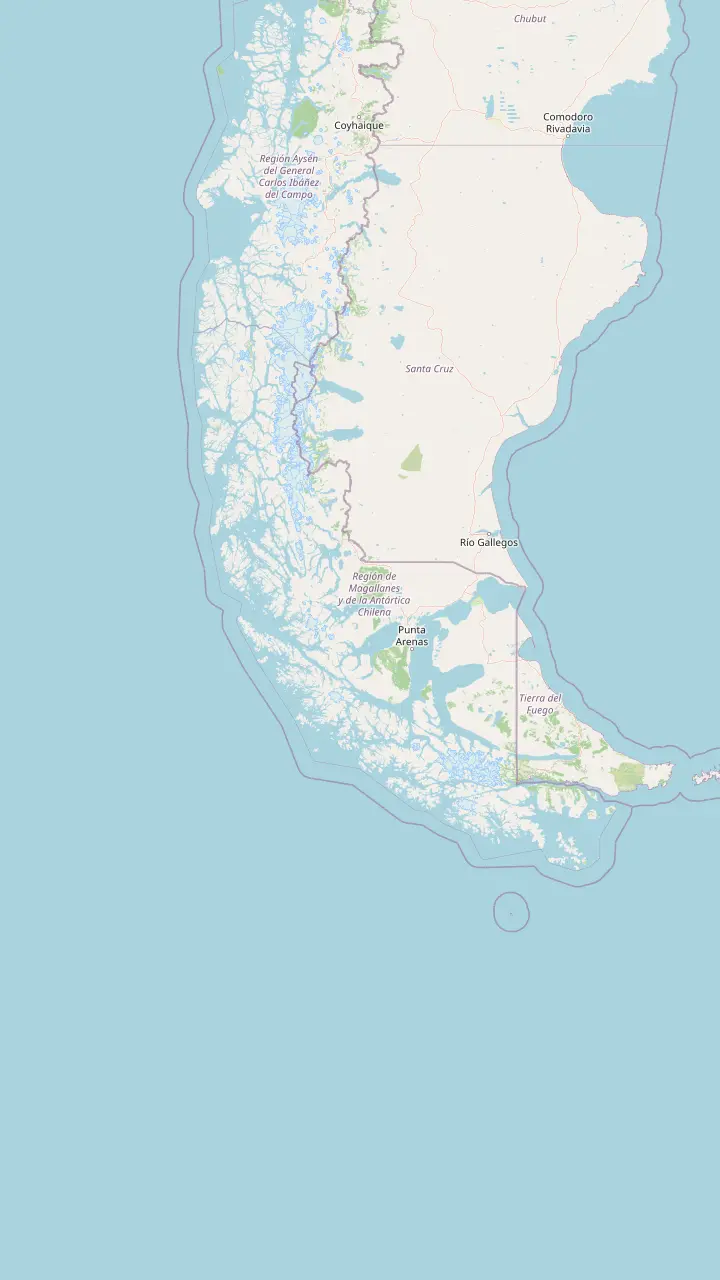
The lighthouse of 1902 that crowns the island walk; rangers keep an exhibition in the old keeper's house.
Google MapsThe first light raised in the Strait area, lit in September 1896 at the western mouth.
Google MapsA cast-iron tower of 14 metres near the Pacific end of the Strait, still run by the Navy.
Google MapsA low light of 1904 that guided ships toward Punta Arenas; today it is lodging.
Google MapsA metal tower of 15 metres from 1901 on the First Narrows, never left without keepers.
Google MapsStone tower of 11 metres built between 1897 and 1900, automated in 1955.
Google MapsPunta Arenas pier named by Sernatur as a departure point for boats to the monument.
Google Maps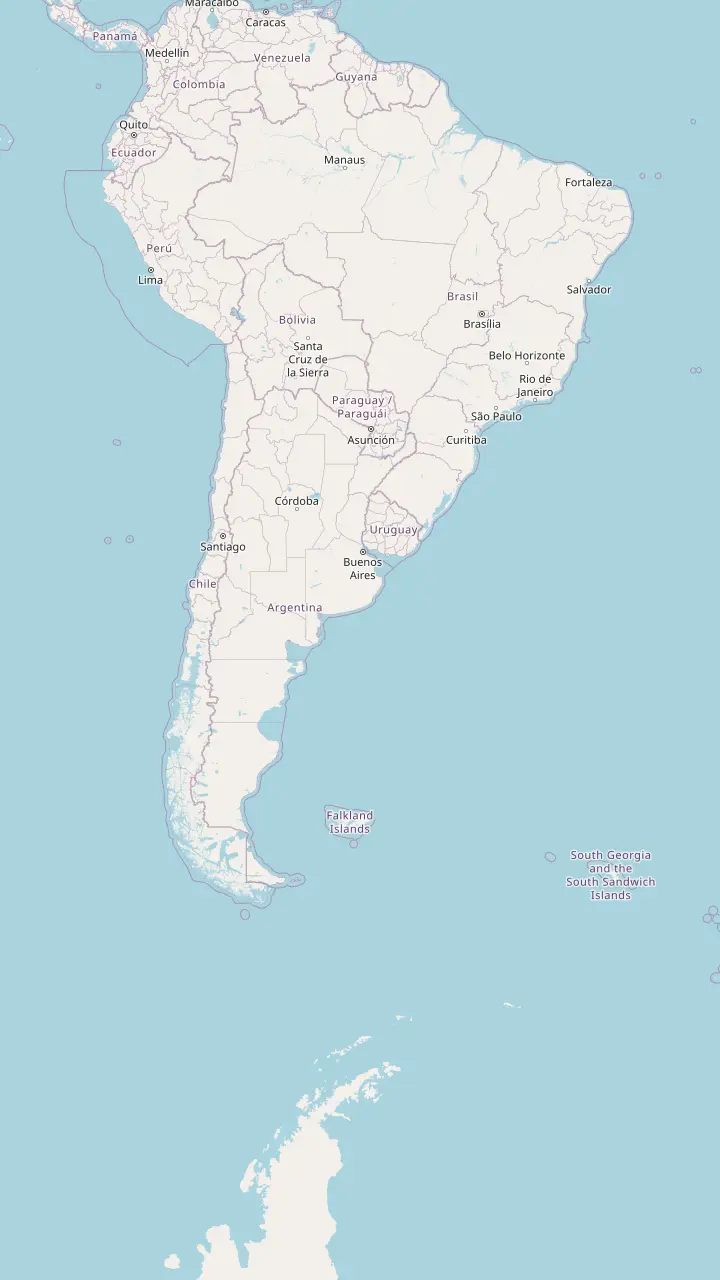
The lighthouse of 1902 that crowns the island walk; rangers keep an exhibition in the old keeper's house.
Google MapsReserve whose islands hold 1,600 pairs on Isla de los Estados and 105,500 on Isla Observatorio.
Google MapsArgentine national park whose colony counts more than 40,000 pairs.
Google MapsArgentine marine park with 13 colonies and 60,000 pairs of Magellanic penguins.
Google MapsChubut reserve that protects the leading mainland colony of the species.
Google MapsRio de Janeiro beach where a young Magellanic penguin was filmed swimming, inside the species' known range.
Google MapsIslets off Chiloé where Magellanic and Humboldt penguins both nest.
Google MapsThe one island of Chile's Humboldt penguin reserve with a trail to see the birds; the Humboldt penguin wears a single chest band.
Google MapsMapping data © OpenStreetMap contributors
Official figures for the Magdalena Island penguins range from counts of nesting pairs to far larger counts of birds. Here is what each one measures, and how CONAF protects the burrows you walk past.
Editorial team, magdalenaislandtour.com · Updated November 12, 2026 · Reading: 8 min
Ask how many Magdalena Island penguins there are and you will get very different answers, all from serious sources. CONAF, the forest and parks service that runs the island, puts the breeding population at roughly 7,000 pairs of Magellanic penguins.1 Sernatur, Chile's national tourism service, describes the island as home to more than 120,000 Magellanic penguins.2 The two figures are far apart, and they do not measure the same thing.
A count of nesting pairs measures nests: the adults that hold a burrow and try to raise young in a given season. Sernatur's figure is a round total of birds, and its page does not say how or when it was counted. CONAF runs the island, so its count of pairs is the one we lead with, and any single number is best read as a snapshot rather than a census.
Tour listings quote larger figures of their own, which we leave aside: a sales page is not a census. What every source agrees on is the scale you feel on the ground: Sernatur calls it one of the largest Magellanic penguin colonies in the world, and in 2023 it named the islands the country's main colony of the species.6,7
Counting the colony
| Source | Figure | What it counts |
|---|---|---|
| CONAF | About 7,000 pairs | Pairs nesting on Magdalena |
| Sernatur | More than 120,000 | Penguins living on the island |
| Sernatur | One of the largest in the world | A ranking, not a count |
| Sernatur, 2023 | The country's main colony | A ranking within Chile |
On Magdalena the burrows are the landscape. CONAF describes vegetation on the island as scarce, with some grasses taking hold only in patches free of penguins and dolphin gulls.11 What you see from the trail is bare, worked soil, dotted with entrances and birds standing guard beside them. Its neighbour Isla Marta is barer still, a desert community with no plant cover at all.12 Between the islands, there is very little green for the eye to rest on.
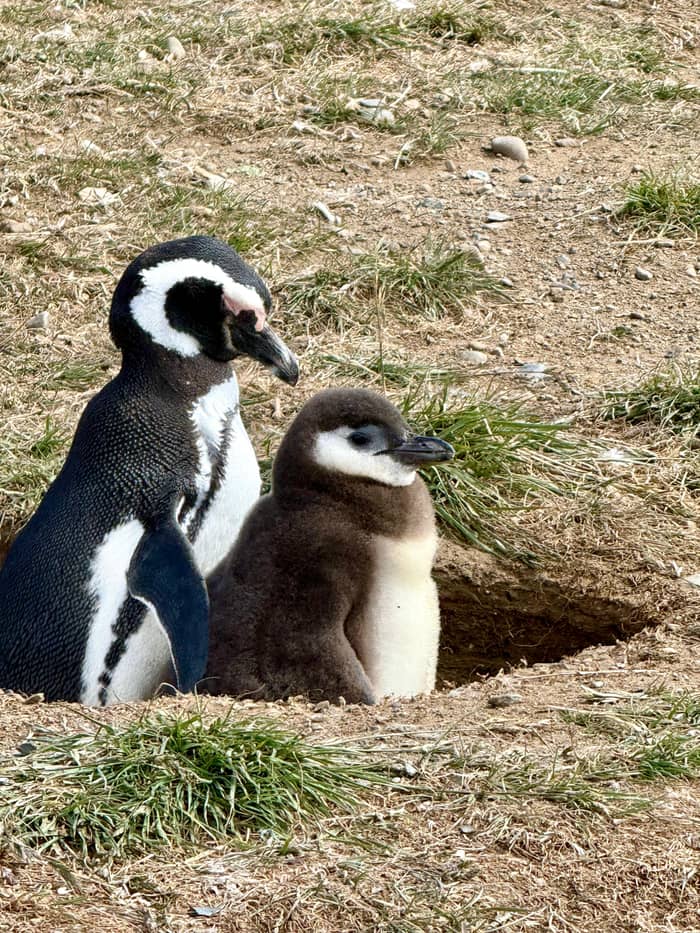
Nests are reused. At Punta Tombo in Argentina, the provincial tourism ministry explains, the males come back ahead of their partners to clean out a burrow they have used before, and the females join them weeks later, pair off and normally lay 2 eggs.13,14 It is the same species as on Magdalena, so expect similar habits: a bird standing at a burrow mouth is usually guarding a home it knows well.
That is why the paths matter so much. Argentina's national tourism portal warns that at Punta Tombo leaving the paths can break the penguins' nests.15 CONAF asks visitors on Magdalena not to go near the burrows, not to approach nests and not to leave the trail, rules that protect ground you cannot always see is hollow.16,17 A careless step off the marked line can collapse a tunnel with an egg or chick inside, so stay on the path even for a photo.
Breeding pairs
The Magdalena Island penguin colony in Chile is easy to reach, but it is not the biggest of its kind. On the Atlantic side, Argentina's Chubut province says the enlarged Punta Tombo protected area takes in a zone with a total of 180,000 pairs.21 Argentina's national tourism portal calls Punta Tombo the most important mainland colony of the species.28 The difference matters if you are choosing between the Chilean and Argentine sides of Patagonia for penguins.
Argentina's national parks administration lists more large colonies. Monte León National Park holds a colony of more than 40,000 pairs, and the Isla Pingüino marine park protects 13 colonies with 60,000 pairs.18,19 Further south, its Isla de los Estados reserve protects 1,600 pairs on the main island, 105,500 on Isla Observatorio and 15,000 on Isla Goffré.20 By any of these measures Magdalena is a medium-sized colony with outstanding access.
Access is the real point. CONAF places the island 35 km from Punta Arenas, to the northeast, near enough for a boat trip of 5 hours from the city.29 The parks administration also stresses that it monitors population size, colony trends and breeding success inside its protected areas, the kind of long-term counting that turns a single number into a trend.30 For a visitor, a smaller colony walked in an hour can feel just as dense as a giant one.
Your part
Pick what you want to do right, and here is how.
If I want close-up photos
Wait on the path and let birds come
Approaching closer than 2 metres is not allowed.22
If I want to see sea lions breeding
Look at Isla Marta from the boat
If I want the reserve's story
Find the rangers' exhibition
It is in the old keeper's house by the lighthouse.25
If I see a sick or dead bird
Tell the guide; do not touch it
The SAG asks people never to handle such birds.26
If I want the most time ashore
Use the whole hour calmly
The stay is capped at 1 hour for the birds' sake.5
On the walk
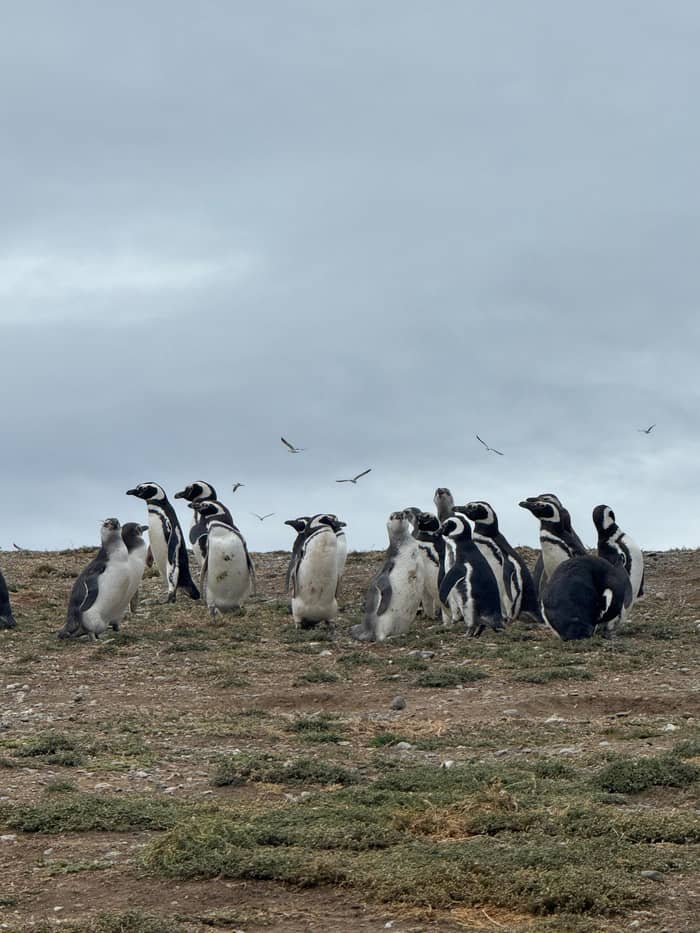
Busiest crossing
First part of the trail
Nests underfoot
Along the marked path
Rangers' base
End of the walk
The island is part of Los Pingüinos Natural Monument, which takes in Magdalena and Marta islands.29 Chile first protected it by decree on 22 August 1966, as a national park for tourism, and renamed it a natural monument in 1982, the status it holds today.3 CONAF gives its area as 97 hectares in the commune of Punta Arenas.55 CONAF in Magallanes has begun celebrating the monument's 60 years with a travelling exhibition of 22 paintings of the islands.56,57
Rangers live with the colony through the season. Rangers are permanently stationed on the island, CONAF says, with an exhibition room in the former keeper's house, toilets for visitors and a path laid out to bring people near the birds.25 At the anniversary event CONAF honoured ranger Roberto Fernández, who was retiring after 47 years of service and whose work on Isla Magdalena reached into environmental education for schools.58
Visitors are part of the protection plan too. Sernatur says you must book a maritime tour registered with Sernatur to reach the island, and CONAF only lets you ashore with tourism guides it has certified and trained in the species' behaviour and the visiting protocol.59,60 When your guide stops the group to let a penguin cross, that is the protocol at work rather than a photo stop, so wait until the bird has passed.
Protecting the islands
1966
Decree founds a national tourism park on the islands.3
1976
The island's lighthouse becomes a Historic Monument.8
1981
The Navy lends the lighthouse to CONAF.9
1982
The park is reclassified as a natural monument.3
Today
At most 150 passengers ashore at once.4
Season
Open 15 October 2026, closing 31 March 2027.10
Penguins are the stars, but they do not have the island to themselves. From September to March, CONAF counts more than 7 bird species living side by side on Magdalena and Marta, the dolphin gull and Chilean skua among them, alongside the penguins, gulls and cormorants.61,1 Watch the skies as you walk: the gulls and skuas patrol low over the burrows, and their presence is part of how the colony works.
Some neighbours are predators. Sernatur puts skuas and giant petrels at the top of the list of land-based hunters, with orcas and seals doing the same job offshore.62 Even the sea lions next door on Isla Marta are a risk, with a diet that runs mostly to fish, squid and crustaceans plus the odd penguin, Argentina's biodiversity records say.63,23 Bear that list in mind when a skua circles low over the trail.62
Isla Marta is the colony's quieter twin. On CONAF's account, Marta is where imperial cormorants nest and where sea lions and fur seals raise pups on the southwest tip; Magdalena is merely a haul-out for them.23 No one may set foot on Marta, which CONAF treats as a strictly protected zone reserved for nesting seabirds and breeding sea lions.24 Tours that include it watch from the water, and the site tour lists 30 minutes of wildlife viewing there, weather permitting.
Video
BackPacker Steve on YouTube · Video data is requested only when you tap play.
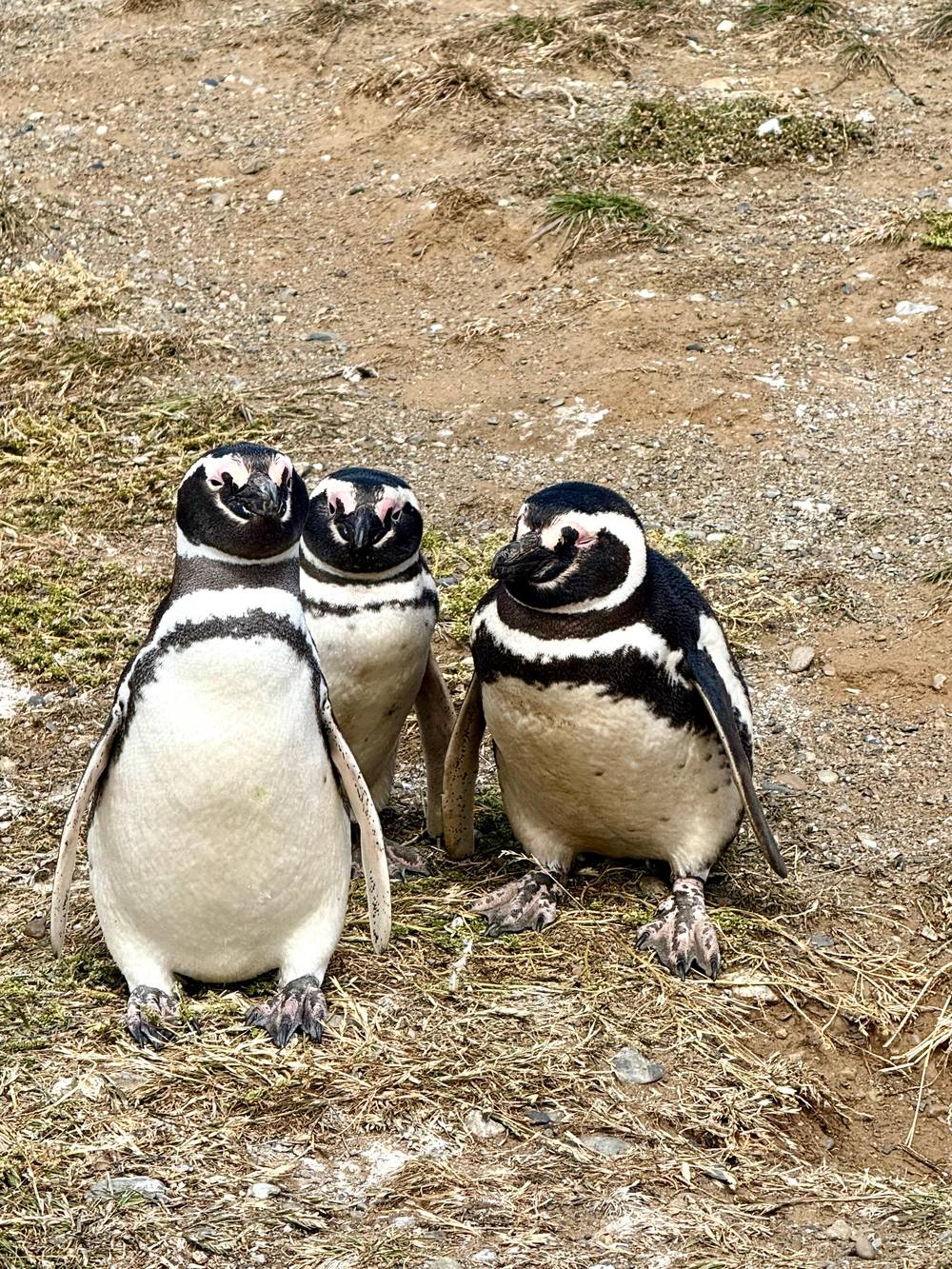
Upon landing on Magdalena Island, you will walk along a trail surrounded by thousands of Magellanic penguins and their chicks, sharing the scenery with imperial cormorants, dolphin gulls, and skuas.
The limits you meet on the island are written into CONAF's visiting rules. No more than 150 passengers may be ashore on Magdalena at the same time, plus the guides each company must assign.4 A stay lasts at most 1 hour, which CONAF says is to limit interference with the birds' feeding and breeding cycles.5 That is why tour boats arrive in a sequence and why your guide watches the clock.
The daily window is set around the penguins too. CONAF's page gives a single visiting window from 8:00 in one paragraph and landings from 9:00 in another, both ending at 18:00, and adds that the timetable follows the penguins' activity patterns.64,65 For the summer ahead, CONAF has fixed the opening for 15 October 2026 and the last landings for 31 March 2027.10 Ask your operator which landing slot your boat holds rather than assuming the earliest.
The most sensitive ground is right at the start. On the first stretch of the trail, about 300 metres from the landing, penguins pass carrying food for their chicks, and CONAF asks for extreme care, never blocking them and never forcing them to regurgitate.66 The viewing rule is simple: do not come closer than 2 metres to a penguin, to avoid stressing the birds.22 Combined, these limits explain why a visit feels calm rather than crowded.
The colony's newest threat is a virus. CONAF's page for the monument carries a notice that Chile is going through an outbreak of highly pathogenic avian influenza, with prevention measures for visitors.67 In a joint review with Peru, CONAF reported that outbreaks reached 11 of 16 Chilean regions, including 7 protected areas, and that more than 30,000 wild animals died, 62% of them sea lions and 6.7% Humboldt penguins, by its tally.68
Your part is small but specific. Chile's farm and livestock service, the SAG, wants sick or dead birds left untouched where they lie and reported to it.26 For a penguin that is hurt or cannot move properly, the environment ministry's contact is Sernapesca, the national fisheries and aquaculture service.69 On a guided visit, tell your guide or a ranger and keep walking; never pick a bird up, however distressed it looks.
Longer-term pressures come from the sea. Interviewed on Argentina's government portal, an Argentine penguin researcher put the warming climate, industrial fishing and pollution of the sea, now plastic more than oil, at the top of the threat list.70 The Magdalena Island penguins depend on the Strait's waters for every meal they carry up the path, so the health of the colony you see on land is decided largely out of sight, offshore.
FAQ
In 2023 Sernatur named the islands the country's main Magellanic penguin colony.7
CONAF caps the stay at 1 hour to limit disturbance to the birds.5
CONAF allows at most 150 passengers ashore at the same time, plus guides.4
CONAF keeps it off-limits so seabirds and sea lions can breed undisturbed.24
Sources
Further reading
Penguins in the Strait of Magellan? Ask a real person.