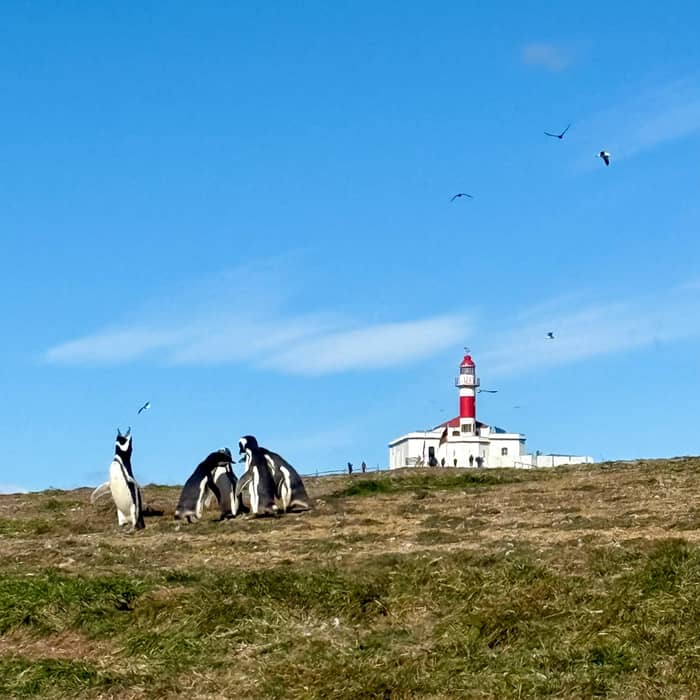
Biggest group
Sea lions
Breeding at the southwest end
- BullsUp to 350 kg
- Harems4 to 20 females
- SeasonFrom mid-December
Checklist to tick off
The quick take
Besides the Isla Magdalena penguins, the tour can show sea lions, fur seals and imperial cormorants on Isla Marta from the boat, dolphin gulls and skuas on the islands, and Commerson's dolphins in the Strait.
Wildlife facts
Checklist: 9 items
Tap items to tick them off. This device remembers your progress.
0 / 9 ready
All set. Only one thing left: choose the morning you sail out to the penguins.
Book your seatThe penguins are the reason you go, but the boat ride and Isla Marta add sea lions, fur seals, cormorants and dolphins. Here is what to look for, when, and how to watch without disturbing it.
Editorial team, magdalenaislandtour.com · Updated November 12, 2026 · Reading: 8 min
Key facts
The Isla Magdalena penguins fill the hour you spend ashore, but the trip around them is a wildlife outing of its own. The tour this site recommends adds 30 minutes of wildlife viewing at Isla Marta to the hour on Magdalena, with speedboat legs of 50, 25 and 45 minutes in between. Its record puts Marta's sea lion colony at more than 1000 animals and adds cormorants, skuas, austral gulls, Antarctic pigeons and the occasional elephant seal.
The same record lists southern dolphins, piebald dolphins and sei whales as possible sightings on the water. Possible is the honest word. The operator itself warns that sightings outside the Magdalena colony depend on the natural behaviour of each species, and the tour's record says Marta is visited only when the weather is good.5 Expect the penguins, and treat everything else as a bonus that depends on the day.
The protected area itself is built around this mix. CONAF says that between September and March more than 7 species of birds share Magdalena and Marta, including the dolphin gull and the Chilean skua.2 Marta hosts an imperial cormorant colony, and its southwest corner is a breeding beach for South American sea lions and fur seals; Magdalena only offers sea lions a place to rest.1 Knowing who lives where tells you which side of the boat to watch.
Field guide
| Animal | Where to look | Size | Best clue |
|---|---|---|---|
| South American sea lion | Isla Marta beaches | Males up to 2.80 m | Bull's lion-like mane |
| South American fur seal | Marta's rocky edges | Males up to 1.90 m | Climbs high on rocks |
| Imperial cormorant | Marta's rock walls | 60 cm | Blue eye-ring, pink feet |
| Commerson's dolphin | Beside the boat | Small | Black and white, rides the wake |
| Sei whale | Open water, rarely | Large | Deep-water swimmer |
Species and places from CONAF, Sernatur and the tour's record; sizes and habits from Argentina's national parks biodiversity system.1,3,13,12,17,19,20,21,22,23,24
Isla Marta is the colony you cannot walk on. CONAF bans landings because the island is an untouchable zone kept for breeding birds and sea lions, so tours watch from the deck.4 Sernatur describes the same view: a large colony of sea lions seen from the boat.3 The island is bare rock and soil, which CONAF calls a desert community without plant cover, and it makes the animals easy to pick out against the ground.11
The bulls are unmistakable. Argentina's biodiversity system describes the adult male South American sea lion as having a very large head, a thick neck and a dense mane that gives it a lion-like look, and lists males at 2.20 to 2.80 m and 200 to 350 kg.12,13 Females are slimmer and smaller, at 1.80 to 2.20 m and 120 to 160 kg.13 From the boat, look for a single massive head among several smaller, sleeker bodies.
Timing changes the scene. The breeding season starts in mid-December, when bulls take territories on the beach and gather harems of about 4 to 20 females, defending them with postures and powerful roars.8,14 A few weeks after the births the colonies break up, around late February.10 At sea they usually dive to between 20 and 65 metres for about 3 minutes, and they eat mostly fish, squid and crustaceans, occasionally penguins.15,16
Sharing Marta with the sea lions is the South American fur seal, a smaller and more agile animal. CONAF lists it among the species breeding at the island's southwest end.1 Argentina's biodiversity system gives males at 1.80 to 1.90 m and 150 to 200 kg, and females at 1.35 to 1.50 m and only 30 to 60 kg.17 Side by side, a fur seal looks compact next to a sea lion bull, and the weight gap between males and females is even wider than in sea lions.
Where you see them says a lot. Fur seals prefer rugged rocky places exposed to heavy surf, and on land they can climb almost vertical rock and leap from one rock to another or into the sea.25,19 Scan the broken edges of Marta rather than the flatter beach, and watch for animals perched higher than you would expect a seal to manage. When the swell is up, the spray around those rocks is part of the show.
They keep different hours from the penguins. The same source says fur seals usually feed at night, near the coast or tens of kilometres out to sea, and that in November the males start arriving on the coast to set up breeding areas.26,6 On a daytime boat you may well find them hauled out on the rocks. Use binoculars if you have them, since nobody may land on Marta.4 A small pair is enough, and it also helps with the cormorant colony on the same rocks.
Set your expectations
Match your wildlife wish to what the trip can give.
If I mainly want penguins
Any departure in season
The hour on Magdalena is the core of every trip.
If I want sea lions too
Pick the tour that includes Marta
The site tour adds 30 minutes at Isla Marta, weather permitting.
If I want sea lion bulls with harems
Travel from mid-December
That is when the sea lion breeding season starts.8
If I want dolphins at the bow
Watch the crossing closely
Commerson's dolphins tend to ride boat waves.23
If I want whales above all
Book a dedicated whale trip
On this route sei whales are only a possible sighting.
Isla Marta
Biggest group
Breeding at the southwest end
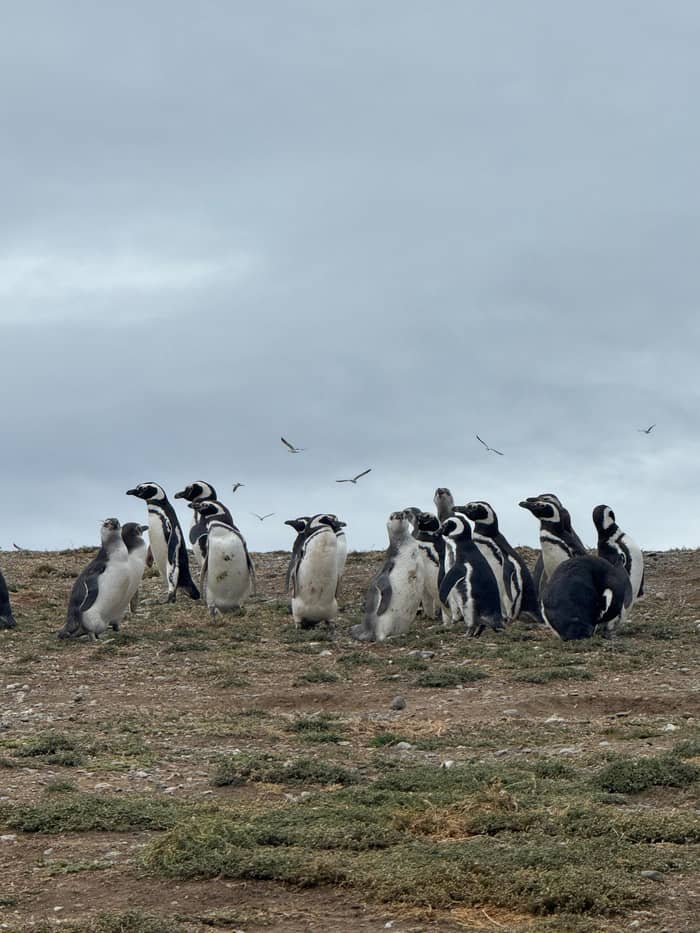
Agile climbers
On the rocky edges
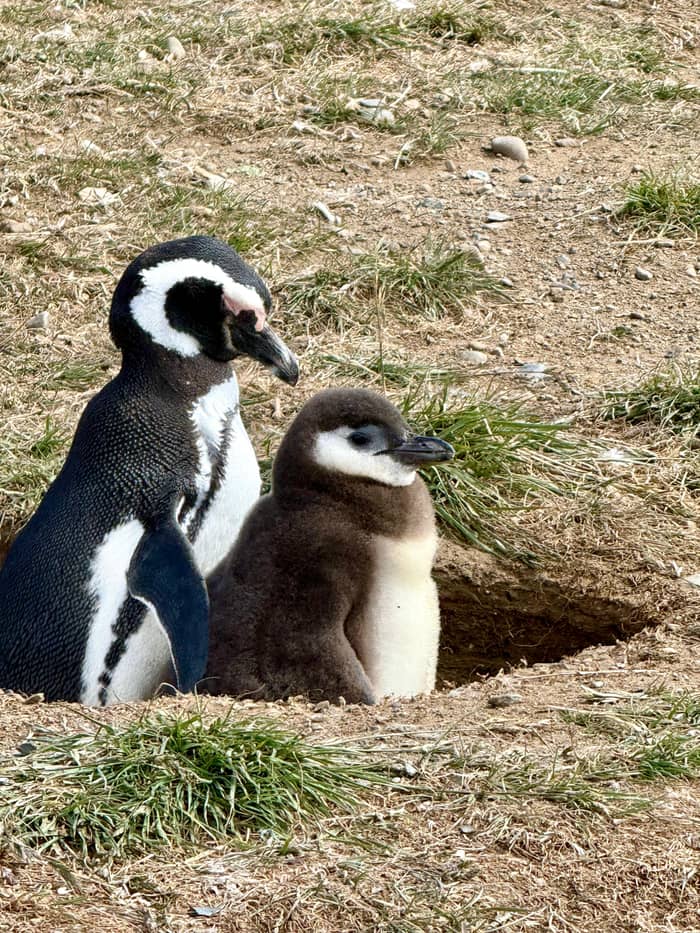
Seabirds
Nesting colony
Isla Marta is also a seabird colony. CONAF says imperial cormorants nest there.1 Argentina's biodiversity system describes the imperial shag at 60 cm, with a long bill and neck, a blue ring around the eye and pink feet, nesting in colonies on rocky walls.20,21,29 It feeds on crustaceans and occasionally fish, and it is a permanent resident of Patagonia, so it is one bird you can see in any month the boats run.31,32
On Magdalena itself, look up as well as down. CONAF lists gulls, cormorants and skuas alongside the penguins, and names the dolphin gull and the Chilean skua among the more than 7 bird species sharing the islands between September and March.27,2 Sernatur describes the walk the same way, with imperial cormorants, dolphin gulls and skuas sharing the scene with the penguins.28 The tour's record adds austral gulls and Antarctic pigeons to the list.
Not every bird is a neighbour in the friendly sense. Sernatur names skuas and giant petrels as the main natural predators of penguins on land.33 When a skua glides low over the burrows, watch how the penguins of Magdalena Island respond to it. CONAF asks you to keep your distance from all wildlife and not to feed or disturb any of it, which applies to gulls following the boat as much as to the penguins.34
Wildlife calendar
September to March
Over 7 kinds of seabird gather on Magdalena and Marta.2
November
Males start arriving to set up breeding areas.6
November to February
Commerson's dolphin calves are born.7
Mid-December
Bulls gather 4 to 20 females on the beach.8
January and February
Sernatur's best months for whale watching.9
Late February
Sea lion colonies disperse a few weeks after the births.10
The animal most visitors photograph from the boat is a small black and white dolphin. Sernatur says Commerson's dolphins often leap beside the boat on the way to Marta.3 Argentina's biodiversity system describes their distinctive, contrasting black and white pattern, and notes that they tend to ride the waves of boats and come close to them.22,23 If one appears at the bow, move to the rail calmly and keep your camera ready.
Their rhythm is quick. The same source says a Commerson's dolphin usually makes 2 or 3 leaps before diving for 15 to 20 seconds.35 Note where it dived and scan slightly beyond that point, which is where to expect it next, rather than chasing every splash with the camera. They live in shallow, sheltered coastal waters, bays and estuaries, so keep an eye on the calmer stretches near the islands as well as the open water.36
Season helps here too. Sightings are most frequent in spring and summer, the breeding season, and calves are born between November and February.37,7 For Chile the species is listed as data deficient overall and vulnerable in Region XII, the Magallanes region you are travelling through.38 The tour's record also mentions southern dolphins as a possibility. Whichever kind appears, stay at the rail and leave the approach to them.
Video
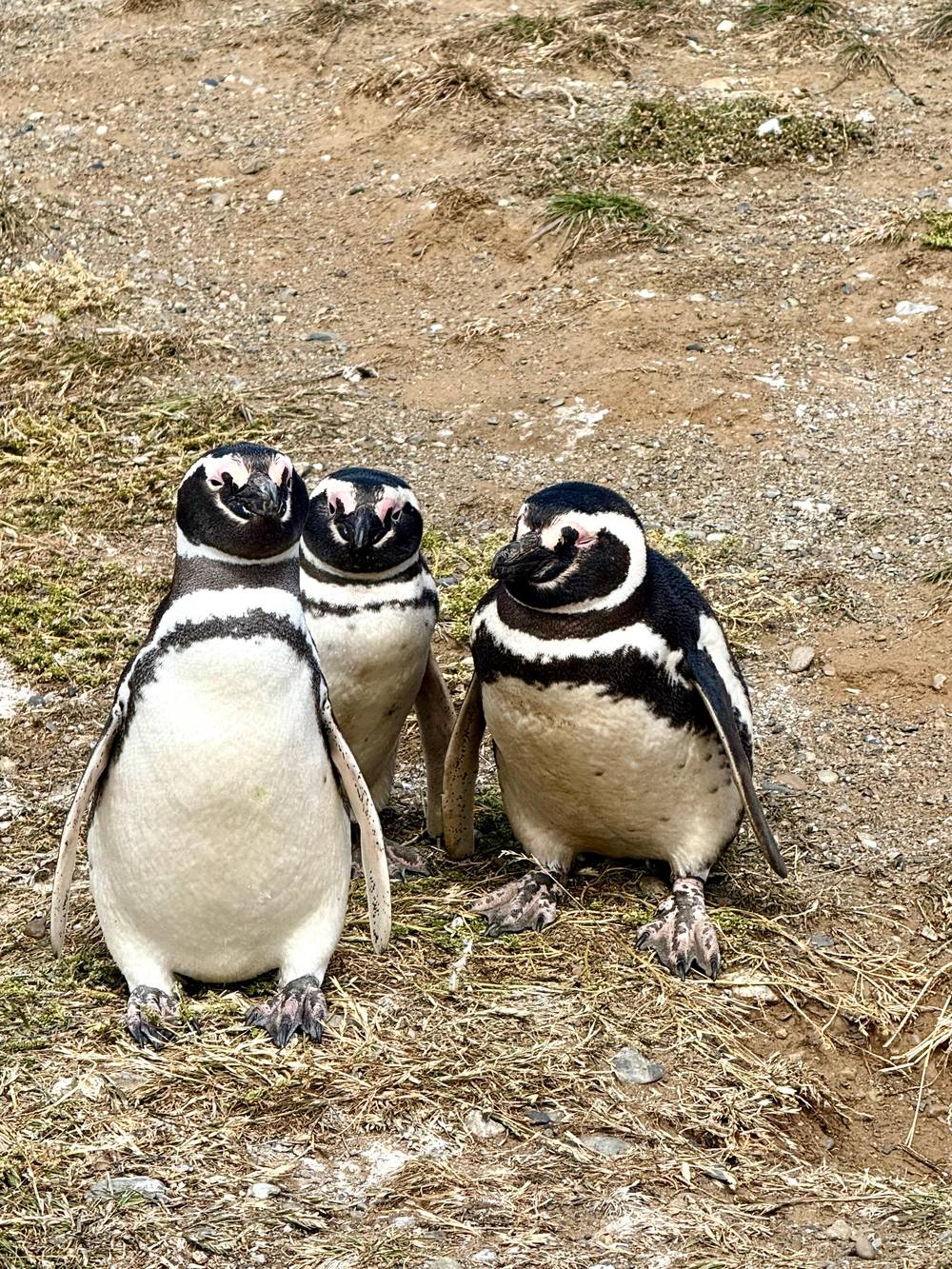
Zorak on YouTube · Video data is requested only when you tap play.
The navigation continues toward Marta Island, where you can observe a large colony of sea lions from the deck.
Whales are possible but never promised. Sernatur lists Magallanes among the regions where both humpback and sei whales turn up, and gives January and February as the peak months for whale watching in Chile.39,9 The tour's record lists sei whales among the possible sightings. Dedicated whale days from Punta Arenas head to the Francisco Coloane Marine Park, a main humpback feeding ground, on trips of 10 to 12 hours; on a Magdalena crossing a whale is a lucky extra.40
The sei whale is an ocean animal. Argentina's biodiversity system says it prefers deep ocean water and is rarely seen near coasts, that it can reach 50 km/h over short distances, and that it is listed as endangered for Chile.24,41,42 If the captain slows down and the crew points toward a blow, keep watching the same patch of water, because the animal may surface again a little further on.
The rarest heavyweight on the tour's list is the southern elephant seal, mentioned as an occasional visitor at Marta. It is the largest of the pinnipeds, with males of 4.20 to 6.20 m and 3,700 to 5,000 kg.43,18 One hauled out on Marta would dwarf the sea lions around it. Do not count on it; the elephant seal, like the whales, belongs in the category of stories you hope to tell afterwards.
The rules that protect the colony also shape how you watch everything else. On Magdalena the code is simple, with a minimum gap of 2 metres to every penguin, no flash, no loud noise and no blocking a bird on its way.44,45 Drones are banned inside the protected area, except for authorised research or professional filming.30 Leave the drone at the hotel and bring a zoom lens instead, which lets you fill the frame from the path or the deck.
Isla Marta has the strictest rule of all, a total ban on landing.4 Any good Magdalena Island penguins tour treats Marta as a floating viewpoint, and the operator itself frames it as sailing alongside the island to watch sea lions and southern bird species.46 Feeding or disturbing wildlife is forbidden throughout the monument, and that includes throwing scraps to gulls or birds following the boat.34
Health rules now matter as well. If you notice a sick or dead bird, leave it untouched and let the SAG, Chile's farm and livestock service, know, as the agency asks.47 Chile's environment ministry adds that a penguin found injured or struggling on a beach should be reported to Sernapesca, the competent authority.48 The islands' penguins and their neighbours are wild animals in a protected area, and watching them well means leaving them exactly as you found them.
FAQ
CONAF says sea lions breed on Isla Marta, and the tour adds 30 minutes of viewing there when the weather allows.1
Marta is closed to visitors on foot and reserved for wildlife to breed.4
Sernatur says they often leap beside the boat; the tour's record also lists southern dolphins.3
The tour lists sei whales as a possible sighting; Sernatur gives January and February as the whale peak.9
Drones are banned in the protected area except with CONAF's permission for research or professional filming.30
The tour's record says Marta is visited only if the weather is good.
Sources
Further reading
Penguins in the Strait of Magellan? Ask a real person.